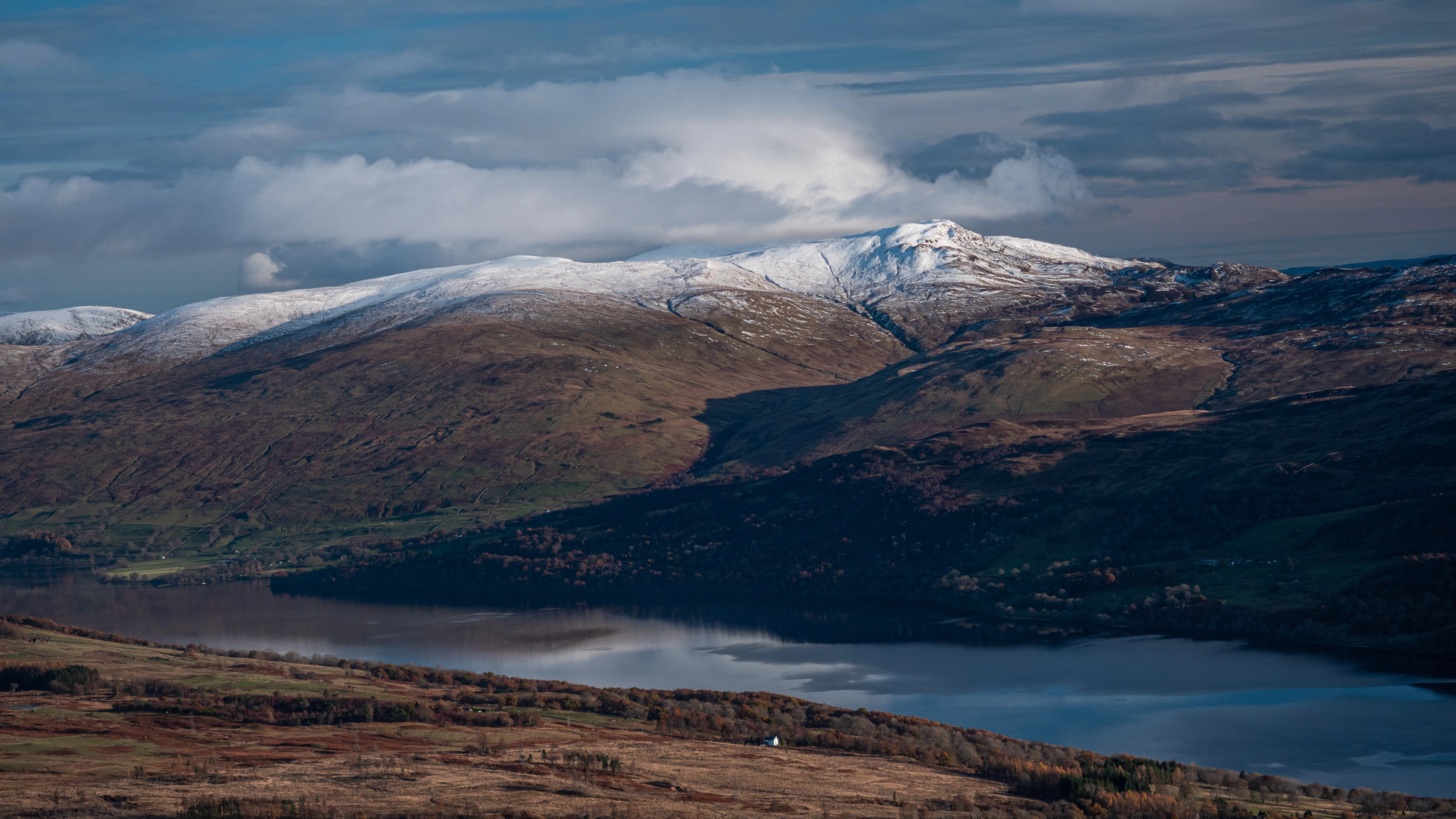
Everyone knows Loch Lomond and Loch Ness, but central Scotland is scattered with dozens of lochs that are just as beautiful and far less crowded. Here are ten of the very best — from vast wilderness reservoirs to tiny hidden gems you can have entirely to yourself.
Scotland has over 31,000 lochs. That number is so absurd it almost stops meaning anything — until you stand on a Highland ridge and see three or four of them glinting below you, each one a different shade of blue, each one with its own character and story.
Central Scotland — roughly the triangle between Stirling, Pitlochry, and Oban — contains some of the finest. These aren’t the famous postcard lochs of the far north. They’re something better: accessible enough for a day trip from Edinburgh or Glasgow, yet wild enough to feel like genuine wilderness.
Here are ten you should put on your list.
1. Loch Tay
Length: 14.5 miles | Deepest point: 155m | Nearest town: Killin
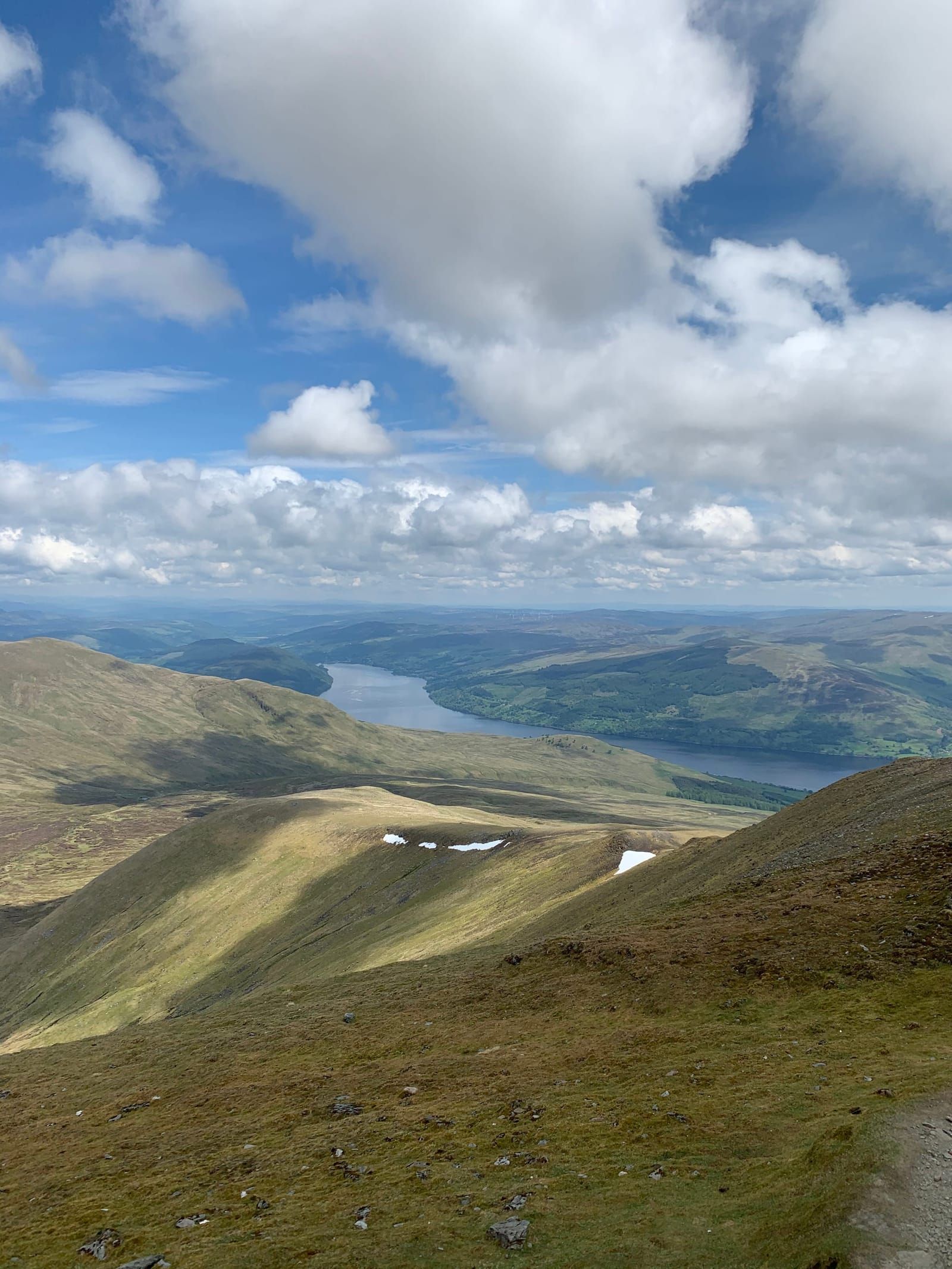
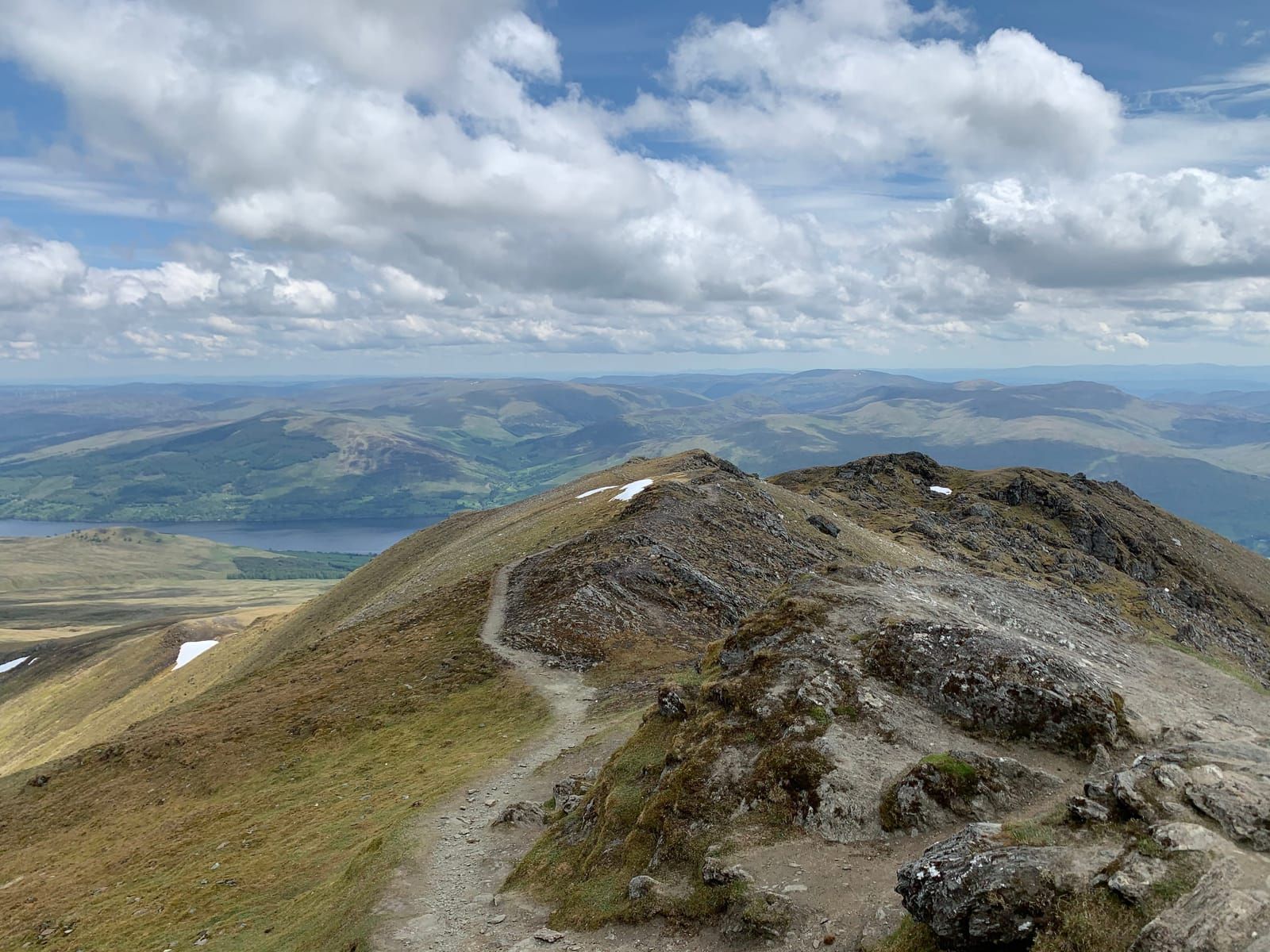
The loch we know best, and unashamedly our favourite. Loch Tay runs southwest to northeast through the heart of Breadalbane, flanked by Ben Lawers to the north and the ancient Glen Lyon hills to the south. At 14.5 miles long, it’s the sixth-largest loch in Scotland by area — and at 155 metres, one of the deepest.
What makes Loch Tay special isn’t just the scenery (though the view from the Kenmore Hotel terrace at sunset is genuinely world-class). It’s the sense of an entire ecosystem — kayakers on the water, fishermen in their boats, Bronze Age crannogs being reconstructed on the shoreline, and Ben Lawers’ rare alpine flowers clinging to the ridges above.
The south shore road is one of Scotland’s finest single-track drives. No coaches. No queues. Just you, the loch, and the mountains.
“A very beautiful loch it is — I have seen nothing like it.” — Queen Victoria, 1842
2. Loch Lomond
Length: 24 miles | Deepest point: 190m | Nearest town: Balloch / Luss
The big one. Loch Lomond is Britain’s largest lake by surface area, and it earns every superlative thrown at it. The southern end is broad, island-dotted, and relatively gentle — perfect for boat trips and waterfront pubs. The northern end, above Tarbet, narrows dramatically into a Highland trench flanked by munros.
The West Highland Way runs along the eastern shore, offering some of the most gruelling and spectacular walking in the country. For sheer drama, take the road to Inversnaid and the waterfall where Gerard Manley Hopkins wrote his famous poem.
The downside? Lomond’s fame means crowds, especially in summer. If you want the Highland loch experience without the car parks, keep reading.
3. Loch Earn
Length: 6.5 miles | Deepest point: 87m | Nearest town: St Fillans / Lochearnhead
Loch Earn is Loch Tay’s smaller, livelier neighbour — a stunning stretch of water that sits at the crossroads between the Highlands and the Lowlands. The village of St Fillans at the eastern end has a pretty waterfront, and Lochearnhead at the west is a watersports hub.
The loch is popular with waterskiers and wakeboarders, and the Lochearnhead Watersports Centre is one of the best facilities in Scotland. For something calmer, the south shore road is a beautiful cycling route with barely any traffic.
The ruined medieval church at Balquhidder — burial place of Rob Roy MacGregor — is a short detour south and well worth the stop.
4. Loch Katrine
Length: 8 miles | Deepest point: 151m | Nearest town: Callander
The jewel of the Trossachs, and one of the most romantic lochs in Scotland. Sir Walter Scott set The Lady of the Lake here in 1810, effectively inventing Scottish tourism in the process. Queen Victoria visited in 1859 and was sufficiently enchanted that Glasgow was allowed to tap the loch as its water supply — which it still is today.
You can’t drive around Loch Katrine, and that’s part of its charm. The SS Sir Walter Scott steamship sails the length of the loch, and the traffic-free road along the north shore is one of Scotland’s finest cycling routes. The landscape is a patchwork of birch woodland, rocky promontories, and tiny islands.
This is peak Trossachs scenery — wilder than the Lowlands, gentler than the true Highlands, and impossibly picturesque.
5. Loch Lubnaig
Length: 4 miles | Deepest point: 43m | Nearest town: Callander
A compact, dramatic loch wedged between steep forested hillsides on the A84 north of Callander. Loch Lubnaig is the loch that most travellers heading to the Highlands from Glasgow or Stirling see first — and it never fails to make an impression.
The loch is excellent for wild swimming (there are several easy-access beaches along the western shore) and the surrounding forests are threaded with mountain bike trails. The Falls of Leny, at the southern end where the River Leny tumbles out of the loch, are a spectacular short walk.
It’s also one of the few lochs in central Scotland where you can wild camp legally and easily, thanks to a network of designated camping spots along the shore.
6. Loch Voil
Length: 3.5 miles | Deepest point: 30m | Nearest town: Balquhidder
If Loch Lomond is the extrovert, Loch Voil is the quiet introvert you want to sit next to at dinner. This slender, mirror-calm loch runs west from Balquhidder through one of the least-visited glens in the Southern Highlands.
The single-track road along the north shore is an absolute dream — especially in autumn when the birch and rowan trees turn the hillsides copper and gold. At the western end, the road runs out entirely, and you’re left with nothing but Glen Buckie, the silence, and the deer.
Loch Voil connects to the even smaller Loch Doine at its western end. Together they form what might be the most peaceful pair of lochs in Scotland.
7. Loch Tummel
Length: 7 miles | Deepest point: 50m | Nearest town: Pitlochry
Famous for one specific viewpoint — Queen’s View, at the eastern end — Loch Tummel stretches west into increasingly dramatic mountain scenery. The view (named for Queen Victoria, who visited in 1866, though Queen Isabella may have admired it centuries earlier) takes in the loch, Schiehallion, and miles of Perthshire forest.
Beyond the viewpoint, most visitors leave. Their loss. The road along the north shore passes through magnificent Caledonian pine forest, and the western end of the loch is wonderfully quiet. The nearby River Tummel is one of Scotland’s great salmon rivers.
Combine with a visit to Loch Rannoch (next on this list) for a genuinely wild day out.
8. Loch Rannoch
Length: 9.5 miles | Deepest point: 134m | Nearest town: Kinloch Rannoch
Loch Rannoch feels like the edge of civilisation. The road along the south shore passes through the Black Wood of Rannoch — one of the last remnants of the ancient Caledonian Forest that once covered most of Scotland. The trees here are 300 years old, gnarled and magnificent, and the forest floor is thick with blaeberries and moss.
At the western end of the loch, the road stops. Beyond lies Rannoch Moor — 50 square miles of blanket bog, lochan, and sky that is widely considered the most remote and desolate landscape in Britain. You can reach Rannoch Station (the loneliest station in the country) by a road that feels like it’s driving into nothing.
This is Scotland at its most elemental. Not pretty. Not gentle. Just vast, ancient, and utterly unforgettable.
9. Loch Lyon
Length: 6 miles | Deepest point: 60m | Nearest town: Bridge of Balgie
The hidden loch. Loch Lyon sits at the head of Glen Lyon — itself the longest enclosed glen in Scotland — and is accessible only by a single-track road that winds 15 miles from Fortingall through increasingly spectacular scenery.
This is a reservoir, dammed in the 1950s as part of the Breadalbane hydroelectric scheme, and its shoreline has the slightly austere quality of all reservoirs. But the setting is extraordinary: the loch sits in a high, treeless bowl ringed by mountains, with the Ben Lawers massif visible to the south. On a clear day, the silence is absolute.
The road to Loch Lyon passes through some of the best wildflower meadows in Scotland, and the glen is home to red deer, golden eagles, and — if you’re very lucky — wildcats.
10. Loch Venachar
Length: 4 miles | Deepest point: 32m | Nearest town: Callander
The Trossachs’ gentle giant. Loch Venachar is broad, calm, and surrounded by low, wooded hills — a complete contrast to the drama of Loch Katrine or the wildness of Loch Rannoch. It’s the loch you come to when you want to sit on a bench and watch the light change for an hour.
The Invertrossachs road along the south shore is a favourite with cyclists, and the loch is popular with fly fishermen (brown trout and pike). The eastern end, where the River Teith flows out towards Callander, has some lovely picnic spots and easy walking.
Loch Venachar rarely makes the lists or the Instagram feeds. It’s not dramatic enough for that. But on a still summer evening, when the water is perfectly flat and the hills are reflected end to end — it’s quietly one of the most beautiful places in Scotland.
The Common Thread
What connects all ten of these lochs isn’t just geography. It’s that each one offers something different — a different mood, a different scale, a different kind of beauty. Scotland’s central belt has world-class mountains and world-class cities, but it’s the lochs that tie the landscape together. They’re the reason the light is so good, the air is so clean, and the views never quite repeat themselves.
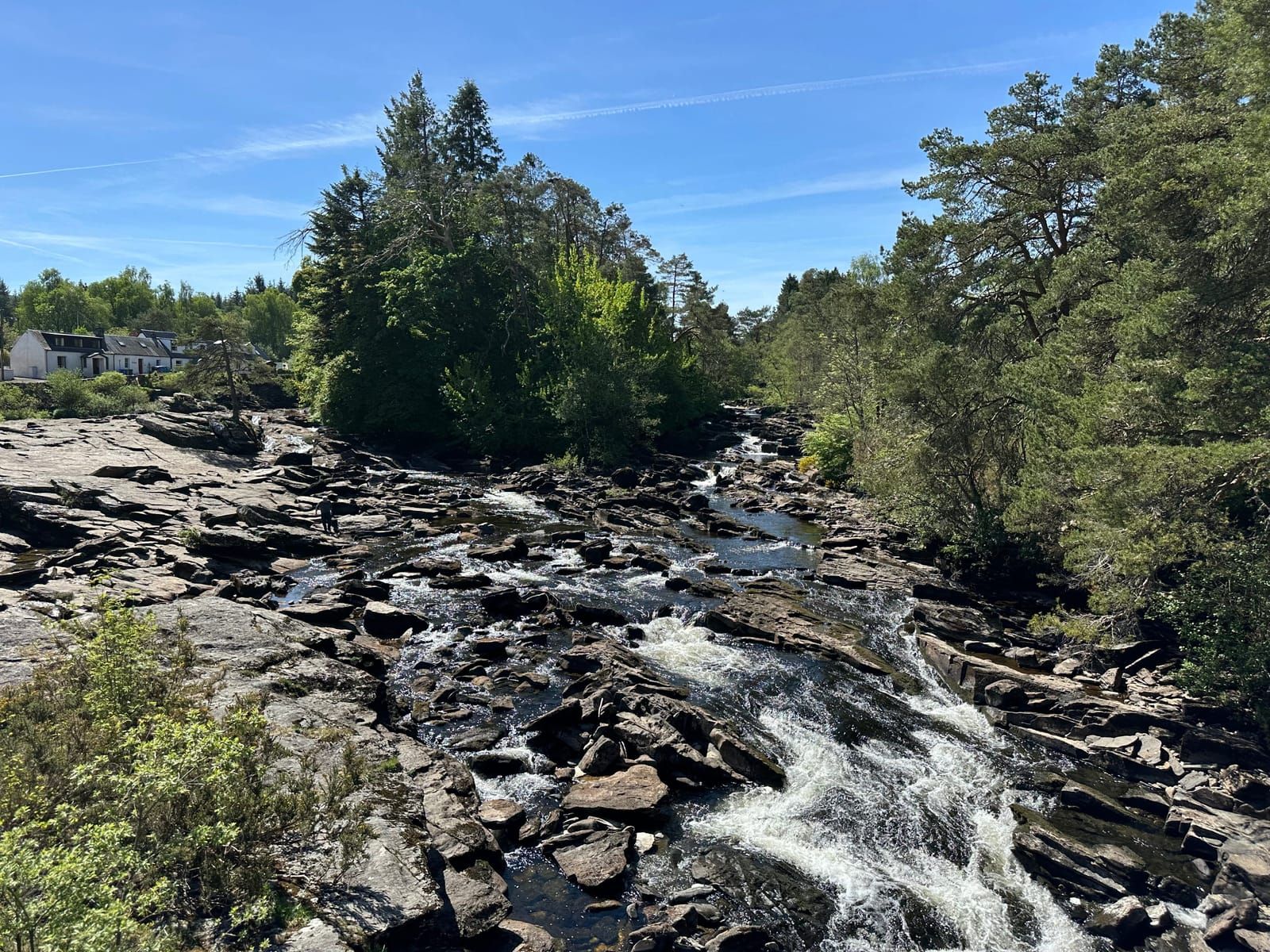
If you’re planning a trip, our advice is simple: don’t just visit one. String three or four together into a day or a weekend. Start at Loch Tay, where you can explore the Falls of Dochart and enjoy some of the best food in the area. Then head south to Loch Earn, west to the Trossachs, or north to Tummel and Rannoch.
Every loch is a different window into what makes this part of Scotland extraordinary.