Falls of Dochart & Inchbuie Walk
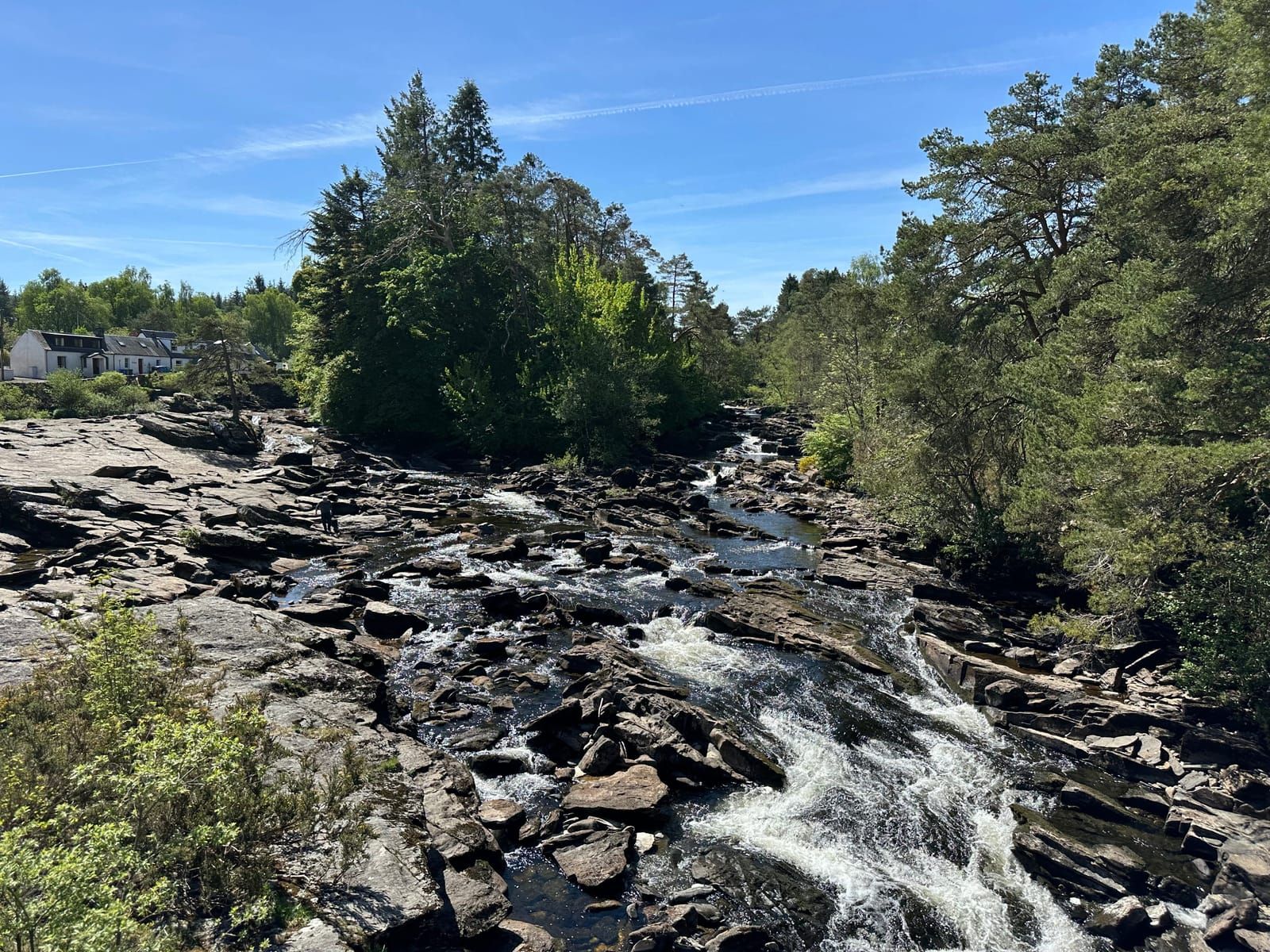
A short, easy walk exploring the famous Falls of Dochart and the ancient Clan MacNab burial island in the heart of Killin.
Popular guides
More outdoors
Find by type
Our favourites
Makers & artisans
Shops & local produce
Easy walk
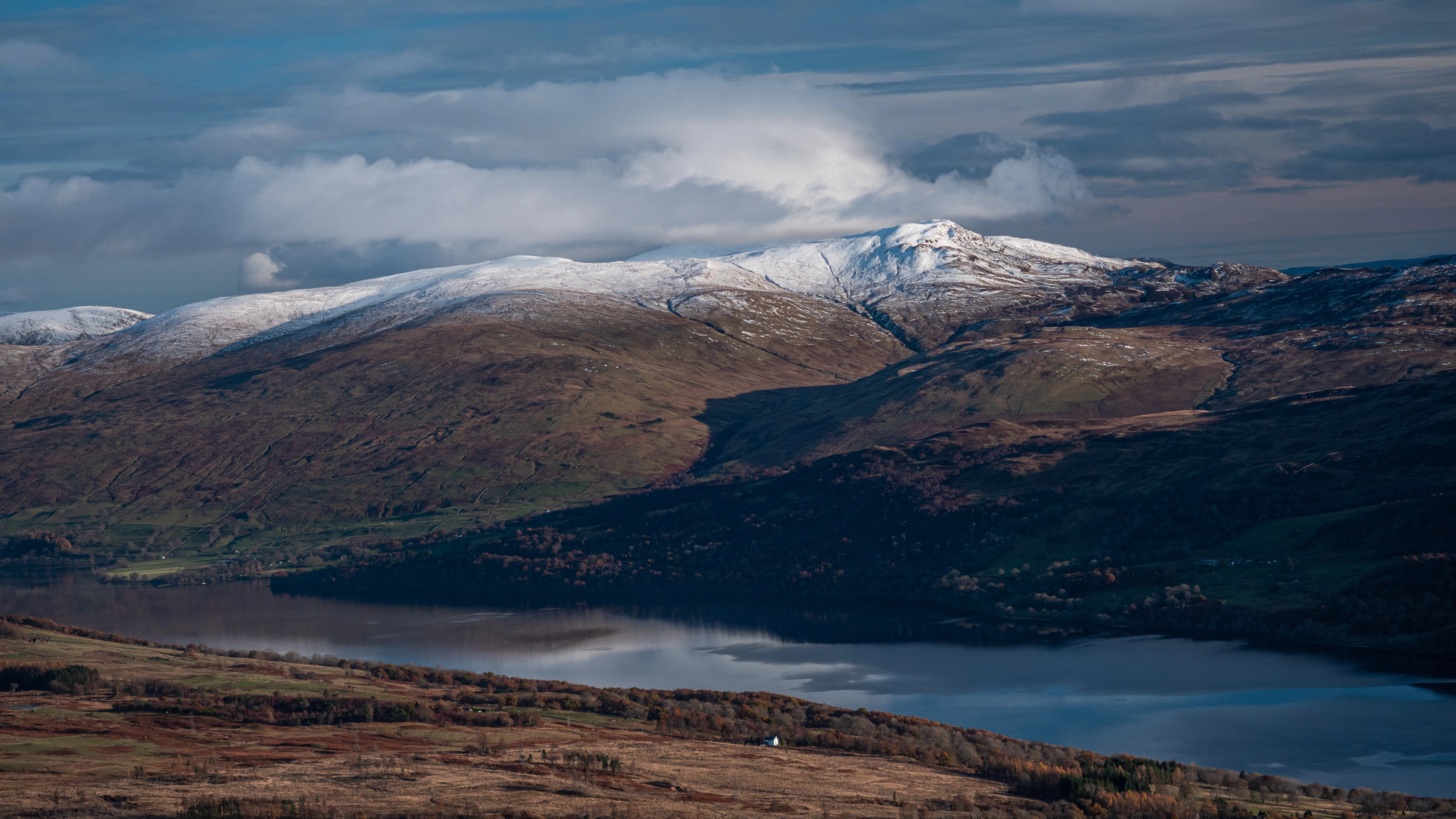
A peaceful, easy walk along the River Lochay through one of Perthshire's quietest and most beautiful glens.
Distance
6 km
Duration
1.5-2 hours
Route type
out-and-back
Parking
Roadside parking near the start of Glen Lochay road
Glen Lochay is one of those hidden Highland valleys that most tourists drive right past — and that’s a large part of its charm. Running westward from Killin into the hills, it’s a gentle, strikingly beautiful glen with a quiet single-track road following the River Lochay through farmland, scattered ancient woodland, and increasingly wild terrain. While the crowds cluster around the Falls of Dochart and the Ben Lawers car park, Glen Lochay offers solitude, a sense of timelessness, and some of the best low-level wildlife watching in the Loch Tay area.
This is not a walk with a dramatic payoff at the end — there’s no waterfall or summit to tick off. Instead, it’s a walk of cumulative pleasure: the sound of the river, the changing light on the hills, the chance of an eagle overhead, the slow unfolding of a glen that reveals its character gradually.
The walk starts from a point along the Glen Lochay road, but the drive itself is part of the experience. From the centre of Killin, take the minor road signed for Glen Lochay, heading west. Almost immediately, the village drops away behind you and you’re in farmland — green fields with sheep and cattle, stone walls, and the river running beside the road.
After the first mile or so, the road narrows to a true single-track with passing places. Traffic thins to almost nothing. The glen sides rise on either side — not dramatically steep, but high enough to enclose you in a green, quiet world. Ancient oaks, birches, and alders line the river, and in spring the verges are thick with primroses, wild garlic, and bluebells.
Drive as far as you like — the road continues for about 8 miles before it ends at the farms of Batavaime and Kenknock in the upper glen. You can start your walk from any point along the road. For the suggested 6 km walk, park at one of the informal pull-offs around 2–3 miles into the glen, where the valley begins to open up and the river pools become larger and more inviting.
There is no formal car park in Glen Lochay. Park considerately at one of the widened pull-offs along the road, making sure you leave room for farm vehicles and other cars to pass. Never block gates or field entrances. The road serves working farms, and the goodwill of the local farmers depends on visitors being respectful.
From your parking spot, simply follow the road or, where accessible, drop down to the riverside path that runs intermittently along the banks of the Lochay. The walking is flat and easy — this is a river valley, not a mountain, and the gradient is barely noticeable.
The River Lochay itself is a constant companion. It’s a classic Highland spate river — running clear and relatively low in dry weather, but swelling dramatically after rain. In its normal state, the water is beautifully clear, running over a bed of rounded stones and gravel with frequent deeper pools where the current has scoured out hollows beneath overhanging banks and tree roots. These pools are a rich green-brown, and in the right light you can see trout holding in the current.
About 2 miles into the glen, you’ll come to an old stone bridge — a single-arched packhorse-style bridge that crosses the river. It’s a lovely feature, lichen-crusted and perfectly proportioned against the landscape. The pool below the bridge is one of the best on the river — deep, slow-moving, and shaded by alders. On hot summer days (they do happen, occasionally), this is a swimming spot for the brave. The water is cold — fed by the hills above — but on a scorching August afternoon, it’s exhilarating.
Beyond the bridge, the river continues upstream with a succession of pools, runs, and small cascades. The character of the water changes constantly — sometimes broad and shallow, chattering over gravel; sometimes narrow and deep, sliding between boulders in silence.
As you continue westward, the glen gradually changes character. The farmland gives way to rougher grazing, the trees become sparser, and the hills press closer on either side. The sense of remoteness increases with every step. The upper section of Glen Lochay feels genuinely wild — there are no houses, no fences, just the river, the hills, and the sky.
The road eventually ends at the farms of Batavaime and Kenknock, but on foot you can continue beyond on rough tracks that lead deeper into the hills. For experienced walkers, routes lead over the watershed to Glen Lyon or westward towards Crianlarich — but these are serious undertakings requiring map, compass, and hill experience. For this walk, turn around at whatever point suits you and retrace your steps.
Glen Lochay has been farmed for centuries, and the landscape bears the marks of its long human history. You’ll see the remains of old field walls, lazy beds (the ridged cultivation strips used for growing potatoes and oats), and occasional ruined buildings — the homes of families cleared from the glen during the Highland Clearances of the 18th and 19th centuries.
At its peak, Glen Lochay supported a substantial population — dozens of families living in scattered townships along the river, raising cattle, growing crops, and making a living from the land. The Clearances, followed by the consolidation of land into large sheep farms and sporting estates, reduced the population to a handful. Today, the glen is home to just a few farming families, and the ruins of the old townships are slowly being reclaimed by the land.
This is not a story unique to Glen Lochay — it played out across the Highlands — but there’s something especially poignant about walking through such a beautiful, fertile-looking valley and seeing the evidence of the communities that once thrived here.
Glen Lochay is one of the best places in the Loch Tay area for wildlife watching, precisely because it’s so quiet. The glen and its surrounding hills are home to:
The hills above Glen Lochay are golden eagle territory. A pair typically nests in the upper glen, and you have a reasonable chance of seeing one soaring above the ridgeline, especially on days with light winds and thermals. Eagles are most active in late morning and early afternoon. Look for a large, dark bird with broad, fingered wings soaring effortlessly in wide circles. They’re significantly larger than buzzards (which are also common here) and fly with a distinctive, flat-winged profile.
Glen Lochay supports a healthy population of red deer. In summer, the hinds and calves graze on the upper hillsides and you’ll often see them from the road. In autumn — October and November — the stags come down to the glen for the rut. The sound of stags roaring and clashing in the early morning mist is one of the great wildlife experiences of the Scottish Highlands, and Glen Lochay is one of the best places to hear it.
The river itself supports dippers — small, dark, rotund birds that bob on mid-stream rocks before plunging into the current to walk along the riverbed in search of larvae. Grey wagtails flit along the water’s edge, their yellow undersides bright against the grey stones. In the woodland sections, listen for great spotted woodpecker drumming on dead trees, and watch for red squirrels in the mature Scots pines and larches.
Overhead, buzzards mew and circle constantly, and ravens — big, black, and barrel-rolling acrobatically — patrol the glen. In spring, the birdsong in the lower glen is remarkable — willow warblers, chaffinches, wrens, blackbirds, and song thrushes creating a wall of sound.
Spring (March–May): The glen comes alive with birdsong and new lambs in the fields. Primroses and wild garlic carpet the woodland floor. The river is often high with snowmelt from the hills.
Summer (June–August): Long evenings, wildflowers in the meadows, and the best chance of warm weather for sitting by the river. Be warned: midges can be absolutely ferocious in the sheltered glen on calm, humid summer evenings (roughly June to September). Bring repellent, or time your walk for breezier conditions.
Autumn (September–November): The birch and oak woods turn gold and amber, the hills go russet with dying bracken, and the deer rut fills the glen with the primal sound of stags roaring. This is arguably the most atmospheric season in Glen Lochay.
Winter (December–February): The hills are snow-capped, the river runs full, and the glen has a stark, monochrome beauty. Red deer come lower, and short-eared owls sometimes hunt the rough grassland. It’s quiet and cold and magnificent.
The River Lochay can rise dramatically after heavy rain. In spate conditions — particularly after prolonged autumn and winter rainfall — the river can overtop its banks and flood sections of the low-lying path and even parts of the road. If the river is very high, stick to the road rather than the riverside path, and don’t attempt to cross any fords or burns that are in flood.
Glen Lochay is equally good — perhaps even better — as a cycling route. The road is almost traffic-free beyond the first mile, and it’s flat enough for any level of fitness. On a bike, you can cover the full length of the glen road (roughly 16 miles round trip from Killin) in a couple of relaxed hours, stopping wherever takes your fancy. Mountain bikes aren’t necessary — any touring or hybrid bike will handle the road, which is tarmac throughout (though sometimes rough in the upper sections).
More walks
A short, easy walk exploring the famous Falls of Dochart and the ancient Clan MacNab burial island in the heart of Killin.
A gentle lochside walk from Killin to the shores of Loch Tay, with beautiful views across the water to the southern hills.
New guides, seasonal tips, and the odd hidden gem — straight to your inbox. No spam.
We respect your privacy. Unsubscribe anytime.